Transform Your Yard with Sod Near Me Service
If you’ve been searching for sod near me because your lawn can’t handle another round of Texas heat, you’re not alone. In Carrollton and across North Texas, we see the same pattern: grass looks fine in spring, then summer stress hits—thin coverage, dead patches, and seams that spread faster than most homeowners expect.
One homeowner recently told us their yard “looked green” for a few days after delivery, but by the second week the sod started loosening along the edges. The culprit wasn’t the grass variety. It was the combination of compacted clay under the turf and watering that wasn’t getting deep enough to help roots establish.
That’s exactly why choosing the right lawn sod installation approach matters. Sod can transform a yard quickly—but only if it’s installed on soil that’s ready to root, and watered in a way that supports establishment instead of just surface greening.
Quick Answer
If you’re trying to decide between ordering sod yourself or hiring a team for sod installation near me, here’s the practical truth:
- Sod succeeds when the soil is properly prepped (loosened, leveled, and firmed so roots can contact soil).
- Fresh sod needs consistent, deep watering—not just frequent misting.
- The “best” sod depends on your sun exposure and mowing habits, especially in North Texas where heat and drought stress are real.
For many homeowners, the safest path is working with a local sod supplier who can help match grass type to your yard and arrange delivery (or pickup) so sod doesn’t sit in the wrong conditions.
Best Grass for North Texas Lawns
North Texas lawns don’t all need the same grass. The right choice can mean the difference between a lawn that fills in within weeks and one that struggles through summer.
Bermuda (often the workhorse in sunny yards)
- Great for full sun and high-traffic areas.
- Many yards do well with bermuda grass sod, particularly when installed and watered correctly during establishment.
- In Carrollton heat, Bermuda can handle stress better than many cool-season options—but it still needs proper root establishment first.
If your yard is sunny and you want a durable, lawn-style turf, Bermuda is often a top candidate. Homeowners who ask for bermuda sod near me typically want something that can bounce back after heat waves and still look solid through the season.
Zoysia (dense, slower to establish)
- Great for homeowners who want a thicker, lower-maintenance look over time.
- Zoysia can be slower to green up early, so patience and correct watering matter.
If you’ve heard of zoysia sod near me and want a dense lawn, it’s worth discussing what type you’re considering. Some varieties establish differently, and your installation timing influences how quickly you see coverage.
St. Augustine (shade-tolerant, moisture-friendly)
- Often chosen for shadier yards or areas that stay a bit cooler.
- If your yard gets afternoon shade or has a more temperate microclimate, st augustine sod near me can be a smart direction.
Fescue (cool-season option)
- Fescue is sometimes used for transitional or shade situations, but it behaves differently in Texas summers than warm-season grasses.
- If you’re considering fescue sod, plan for summer management differences and realistic expectations about peak performance.
A field observation we see often
In North Texas, lawns that fail after sod installation often share one thing: the soil under the sod wasn’t loosened enough to let roots penetrate. The surface looks fine, but the roots can’t work their way into compacted clay. Over time, that shows up as lifting seams and thinning patches.
Why Some Sod Fails After Installation
Sod failure isn’t usually “bad sod.” It’s usually one of these installation or care issues:
- The sod dried out during delays (or sat too long before installation).
- Soil was prepared too shallowly, leaving compacted layers that prevent root penetration.
- Watering was applied too lightly, wetting only the top layer while roots stayed dry underneath.
- Sprinkler coverage missed sections, creating dead seams that spread outward.
- Edges weren’t properly secured, so the first few days of root establishment couldn’t “lock” the turf in place.
When a homeowner calls us because they’re searching for lawn sod installation help, we typically find the same root cause: the sod was installed, but the soil and watering plan didn’t match the realities of Texas clay and heat.
Mistakes That Keep New Grass From Rooting
Let’s talk about the common mistake homeowners make—because it’s the one we hear about most.
Common mistake: watering on a schedule without checking depth
Many people water new sod like they’re keeping it “fresh and green.” That’s understandable. The problem is that sod doesn’t root from the surface—it roots into the soil below.
In many Carrollton yards with heavy clay, frequent light watering can keep the top moist while the soil underneath stays too dry (or too compacted). The sod may look okay for a week, then start failing at seams as roots can’t establish strong contact.
Other mistakes we commonly see:
- Ordering sod without confirming the grass type matches sun/shade conditions
- Skipping starter nutrients when the goal is fast establishment (more on that below)
- Installing on soil that wasn’t graded/leveled, causing low spots and water pooling
- Stretching sod pieces too tightly without addressing uneven ground
Sod Preparation, Delivery, Installation, and Aftercare Checklist
This is the checklist we use to help homeowners avoid the “it looked fine at first” problem.
Before delivery or pickup: prep matters more than people think
- Remove old debris (rocks, dead vegetation, and thatch buildup).
- Loosen compacted soil to the depth the roots will reach comfortably.
- Grade and level so water doesn’t pool in dips or run off slopes.
- Confirm sprinkler coverage (especially along edges and corners).
- If you’re planning a full yard refresh or replace grass with sod, think about soil amendments and compaction early—don’t wait until the day of installation.
During installation: the “contact” step
- Lay sod tight seams-to-seams (no gaps).
- Stagger joints like brickwork when possible.
- Roll or firm sod so it makes solid contact with soil.
- Cut edges cleanly for doors, borders, and beds.
After installation: watering that supports rooting
- Water enough to keep the sod and top soil consistently moist for establishment.
- As roots begin to form, you’ll transition toward deeper, less frequent watering.
- Watch for dry seams, pooling areas, or footprints that remain after walking—those are clues about moisture distribution.
Starter fertilizer and soil support
In most North Texas installs, a starter fertilizer for new sod helps the grass focus on rooting rather than just greening. Many teams also use compost for lawn in the right situations to improve soil structure and help the surface hold moisture more evenly.
Maintenance during the first weeks
- Avoid heavy traffic on new turf.
- Don’t mow until the grass is established and blades are long enough to cut safely.
- Keep an eye on weeds—early competition can slow establishment.
Sod Delivery Planning: Pickup vs Delivery Services
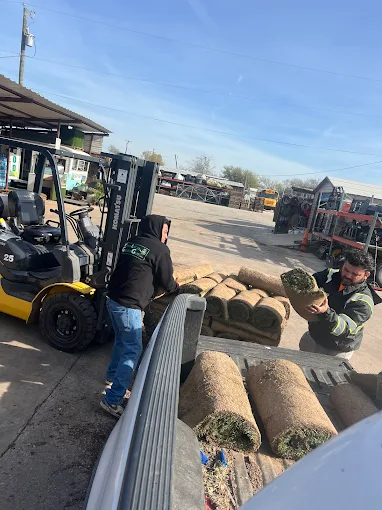
Homeowners often ask whether they should pick up sod themselves or use sod delivery services.
Here’s a realistic way to decide:
Choose delivery when:
- Your yard prep isn’t fully ready yet (you still want a controlled timeline).
- You need help coordinating installation logistics.
- You’re replacing a larger area and want fewer moving parts.
Choose pickup when:
- You’re installing immediately and can handle loading/unloading efficiently.
- The area is small and timing is under your control.
If you’re comparing options, it helps to understand how your order is handled. If you want to explore delivery planning, you can review details here: sod delivery services.
If pickup is more your style, you can also review local support options here: local grass pickup support.
Our Experience With Grass Installation in Texas Conditions
In the field, we’ve noticed a pattern that surprises homeowners: the biggest “sod cost” often isn’t the pallet price—it’s the cost of repeating the job. Cheap sod that doesn’t root usually ends up costing more later once you’re reordering and re-installing.
One anonymized project we frequently see:
- Homeowner ordered sod to fix patchy areas after summer thinning.
- They had decent sun exposure and the right grass type, but the soil in the dead zones was more compacted than the rest of the yard.
- Sod looked good for several days, but the seams lifted first along the boundary between “compacted” and “less compacted” soil.
- The fix wasn’t more sod—it was correcting the soil contact and adjusting watering depth.
That’s why we encourage homeowners to plan their install around soil readiness and irrigation coverage—not just the grass itself.
What To Do Before Sod Delivery Arrives
If you want fresh sod near me to look good after week one—not just day three—do these steps in advance.
Pre-delivery checklist
- Confirm access for trucks/pallets (driveway width, gate clearance).
- Make sure the yard is cleared and graded so installation doesn’t stall.
- Confirm you have enough help or a contractor scheduled for the install day.
- Ensure sprinkler heads are operational and coverage is tested.
- If you’re doing a full refresh, outline where sod will be staged and how you’ll move it during installation.
If you’re unsure what’s best for your yard, a short consult can save a lot of frustration. You can start here: sod consultation for North Texas lawns.
Signs Your Lawn Needs Sod Replacement (Not Just Patching)
Sod is a smart solution when dead grass has gone beyond “patch it and move on.” Common signs include:
- Large dead zones that won’t green up after watering adjustments
- Persistent thinning that returns after heat waves
- Uneven coverage where weeds have moved in
- Areas where foot traffic destroyed the turf and soil is exposed
If you’re deciding whether to repair or replace, sod can help—especially when you’re doing targeted areas like front-yard curb appeal or HOA-required lawn coverage. For patchy lawns, you can also explore professional sod installation services to see what’s possible for your layout.
Sod Cost Planning: What You Should Budget For
Homeowners often ask, “How much does sod cost?” and then quickly land on pallet pricing.
A few realistic notes:
- The pallet of sod price varies by grass type and how it’s sold locally.
- The total cost depends on how much area you’re covering and whether soil prep is required.
- If you’re replacing grass because of dead zones, budgeting for soil correction matters—otherwise the “cheap” sod can become an expensive redo.
A good rule: plan for both materials and the steps required for rooting. That’s where the best results usually come from.
Carrollton and North Texas Relevance: Why Your Soil and Sun Matter
Carrollton lawns often sit on clay-heavy soils that compact easily, especially in newly landscaped or high-traffic areas. Add summer heat and drought stress, and you get a simple equation:
- If water doesn’t reach deep,
- and soil stays compacted,
- sod can green up temporarily but fail at the seams.
That’s why matching grass to conditions (sun/shade, foot traffic, irrigation consistency) is part of “buy sod near me” decisions—not an afterthought. The right grass variety plus correct establishment is how you get durable coverage instead of recurring dead patches.
Key Takeaway
Sod near me can be a quick fix, but only if you treat installation like root establishment—not just turf placement. Prepare the soil, install promptly, water deeply and consistently, and monitor seams during the first weeks.
Short References for Homeowners
- University of Georgia Extension notes that warm-season turf establishment depends heavily on proper watering and soil contact during establishment (UGA Extension, Turfgrass Management resources).
- Texas A&M AgriLife Extension discusses turfgrass water needs and practical guidance for establishing healthy turf under heat stress (Texas A&M AgriLife Extension).
- Purdue University Extension provides general turf establishment principles, including the importance of correct irrigation and early care (Purdue Extension turf resources).
- Rutgers Cooperative Extension emphasizes that turf establishment is sensitive to irrigation timing and soil conditions (Rutgers Extension turf resources).
FAQ
How soon should sod be installed after delivery?
Sod should be installed as soon as possible after delivery to reduce drying risk. If sod must be staged temporarily, it should be kept from drying out and installed promptly once the yard is ready. Delays can cause surface drying that slows early rooting. If you’re coordinating a sod delivery near me order, plan your prep and install timeline so the crew can start immediately.
What’s the best grass for Texas lawns in Carrollton?
Most homeowners in sunny yards do well with warm-season options like Bermuda. Zoysia can be great for those who want dense coverage over time, and St. Augustine often fits yards with more shade. The “best” choice depends on sun exposure, irrigation consistency, and how quickly you want the yard to fill in.
Should I use starter fertilizer with new sod?
In many North Texas installs, a starter fertilizer helps new sod establish faster by supporting rooting during the critical early period. The exact product and rate matter, and it should be used as directed. A quick consultation can help you choose what’s appropriate for your soil and grass type.
How often should I water new sod?
During establishment, watering is typically more frequent at first, but the key is watering deeply enough to encourage root growth, not just keeping the surface moist. North Texas clay soils can mislead homeowners—light watering can look fine on top while roots struggle underneath. Monitoring moisture and adjusting as roots establish is the goal.
Can sod fix dead grass and patchy lawn problems?
Yes—sod can fix dead zones, but only if the underlying soil issues are addressed. If compacted clay, poor drainage, or irrigation coverage problems caused the dead grass, sod alone won’t be enough. For best results, plan for soil preparation and watering adjustments alongside the replacement.
Ready to Repair or Replace Your Lawn With Fresh Sod?
If you want a smooth process—from choosing the right grass to planning delivery and getting your sod installed correctly—our team can help you map out the best next step for your yard.
About Your Local Grass Guy
Your Local Grass Guy provides sod sales, grass delivery, pickup options, consultations, and sod installation services throughout Carrollton, TX and surrounding North Texas communities. We focus on helping homeowners choose the right grass for local conditions, prepare lawns properly for rooting, and establish healthier turf through practical sod guidance, delivery support, and professional installation solutions.