
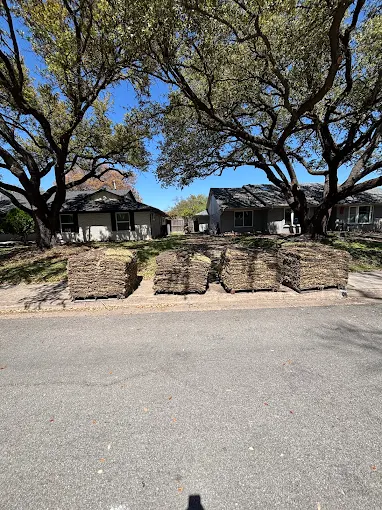
Fresh Sod Delivery Near Me: Get It Right
If your lawn in Carrollton looks great in the spring and then turns patchy, thin, or spotty by early summer, you’re not alone. A lot of homeowners assume the problem is “bad seed” or “the wrong fertilizer,” then try to fix it with more watering and more product.
But one pattern we see often is this: sod was ordered, delivered, and laid… yet the seams dried out, the roots struggled to take in compacted soil, or the wrong grass type was used for the yard’s sun and foot traffic. The result is a lawn that looks temporarily better and then starts failing underneath—especially in North Texas clay.
Fresh sod delivery can be a fast path to a usable lawn, but only when timing, soil prep, and grass selection line up. Here’s how to get it right the first time—without wasting money on turf that won’t root.
Quick Answer
For best results with fresh sod delivery near me, plan for these essentials:
- Choose the right grass for your yard’s sun/shade and traffic (Bermuda, zoysia, or St. Augustine are common North Texas options).
- Prepare the soil before the pallets arrive so sod can root immediately.
- Install quickly after delivery (the longer it sits, the higher the risk of drying and seam failure).
- Water deeply and consistently during establishment—then reduce frequency as roots grow.
- If you want help choosing, ordering, and getting it installed correctly, start with a turf consultation and delivery/installation plan.
Why “Fresh Sod” Matters More Than Most People Think
In North Texas, sod is only “fresh” for a short window.
On a typical job, we can tell within minutes whether the sod will establish well or fight the soil. The big drivers aren’t just the grass variety—they’re how the pallets were handled, how quickly the yard was ready, and whether the base was loosened enough for roots to penetrate.
A realistic homeowner scenario we see
A family wants curb appeal before a birthday party. They order sod, but the yard isn’t fully graded and the sprinkler coverage is incomplete. Delivery happens, but installation gets delayed while they run to the store for topsoil and adjustments. The sod looks fine at first. Then, after a couple hot days, the seams begin to lift and the edges brown.
That’s not “mystery turf failure.” It’s almost always a timing + soil + watering mismatch.
One firsthand field observation (North Texas edition)
In many Carrollton yards with heavy clay, we’ll see a hard layer under the surface—especially where driveways, utility work, or previous landscaping compressed the ground. If that layer isn’t addressed, sod roots can’t push down. You get surface rooting, followed by dry seams and “dead lines” between strips.
That’s why “good sod” alone doesn’t guarantee success.
What Homeowners Often Overlook
1) The yard isn’t ready for sod until it’s ready for roots
Sod can’t compensate for compacted soil. When the base is too firm, roots struggle to establish, and the lawn becomes fragile—especially during Texas heat and the first weeks of establishment.
2) Sprinklers are often the hidden problem
Even when homeowners water “on schedule,” sprinkler coverage gaps can create dry pockets. With sod, those dry pockets show up fast at the seams and corners.
3) Grass selection has to match the yard
North Texas yards aren’t all the same. Shade, irrigation reliability, mowing habits, and foot traffic matter. Choosing the wrong grass is one of the most expensive mistakes because you can’t fertilize your way out of poor fit.
4) “More water” isn’t the goal—deep moisture is
During establishment, sod needs consistent moisture, but it should still soak down toward where roots will grow. If water runs off or never reaches the soil underneath, the grass may stay green on top while the roots fail below.
Common Mistakes That Keep New Grass From Rooting
Here are the mistakes we most often see when homeowners try to replace grass with sod or plan a quick refresh:
1. Waiting to prep until after delivery
- Soil should be graded and ready before the pallets show up. If you’re hauling materials after delivery, sod is sitting too long.
2. Installing on top of uneven grade
- Low spots trap water and high spots dry out. Both can break rooting at the seams.
3. Not staggering seams
- Seams should be tight and offset like brickwork. Straight seams create weak lines that dry out first.
4. Overwatering in the wrong way
- Light, frequent watering can keep the surface wet while the soil beneath stays dry.
5. Skipping starter nutrition
- New sod benefits from a starter fertilizer approach so roots can establish faster—especially when the soil is lean or recently disturbed.
Sod Preparation, Delivery, Installation, and Aftercare Checklist
Whether you’re hiring installation or planning your own timeline, use this order of operations. It’s built around how sod actually roots in North Texas conditions.
Before delivery (do this first)
- Measure accurately (include waste for tight corners and odd angles)
- Confirm sprinkler coverage
- Run zones and note dry spots, low-pressure areas, and broken heads
- Clear and remove old grass
- Remove dead turf and weeds so sod can contact soil properly
- Grade the base
- Aim for smooth, level grade so seams don’t lift
- Loosen compacted soil
- In clay-heavy yards, surface scraping isn’t enough. Roots need a workable base
- Plan for immediate installation
- Have a path for pallets, tools staged, and enough help on installation day if DIY
Delivery day (make it quick and orderly)
- Inspect pallets on arrival
- Sod should look healthy and not dry or overly compressed
- Install immediately
- Avoid letting sections sit in the sun or shade for long stretches
- Keep seams tight
- Offset seams and press sod firmly into place
First two weeks after installation
- Water consistently
- The goal is moisture stability while roots establish
- Check edges and seams daily
- Early lifting is easier to fix than late-stage failure
- Avoid heavy traffic
- Let the grass root before mowing
- Follow a starter plan
- Starter fertilizer and good aftercare help roots take hold faster
When to schedule sod installation services
If you’re trying to coordinate delivery and install, consider professional professional sod installation services—especially if your yard needs grading, sprinkler adjustments, or you want a tight installation window.
Sod Delivery vs Pickup (How to Choose in Real Life)
Many homeowners search “sod delivery near me” because pallets are heavy and timing matters. Delivery can reduce delays—if your yard is ready.
If you’re deciding between delivery and pickup, here’s a practical way to think about it:
| Option | Best for | Main risk |
|---|---|---|
| Delivery | You want tight timing and less hauling | Yard not ready → sod sits too long |
| Pickup | You have a crew ready and a fast install plan | Delays on loading/unloading and transport |
If you want a smoother process, start with our sod delivery services so you can coordinate timing with your installation plan. For homeowners who prefer to manage logistics, our local grass pickup support can be a good fit when your schedule is tight and your base is ready.
Signs Your Lawn Needs Sod Replacement (Not Just Repair)
Sod isn’t always the answer. But replacement is often the fastest route when you see patterns like these:
- Patchy dead zones that keep returning after reseeding
- Large thinning areas where the root system is failing
- Compacted or disturbed soil from construction or drainage issues
- Persistent weeds that keep outcompeting new seed
- Severe shade stress where seed struggles to establish
Sometimes you can improve a lawn with patching, aeration, and targeted watering. Other times, replacing grass with sod makes more sense because it resets the foundation quickly.
For patchy or damaged areas, you may also want grass sales for new lawns guidance so you’re matching turf to the problem—not just buying turf.
Best Grass for North Texas Lawns (And What We Recommend)
North Texas lawns often do best with grass types that handle heat, recover from stress, and fit local watering realities. The “best” choice depends on sun and mowing tolerance.
Common North Texas grass options
- Bermuda grass sod: fast recovery and strong heat tolerance; great for sunny yards and active lawns
- If you’re exploring bermuda grass sod, we’ll often look at your mowing schedule and how often you can water during establishment.
- Zoysia sod: slower to start but dense once established; good for homeowners wanting a thicker feel with less frequent mowing
- Some yards respond well to zoysia sod near me options like Zeon zoysia sod, especially where you want a more golf-course-like texture over time.
- St. Augustine sod: typically stronger in shade and looks lush, but it has different maintenance and watering considerations than Bermuda/zoysia
- For shade-leaning yards, st augustine sod near me can be a solid direction.
- Fescue sod: used more in certain regions; in North Texas heat it can require more specific care depending on the yard and irrigation reliability
A clear recommendation we use on-site
If your yard gets mostly sun, you want quicker establishment, and you can maintain establishment watering: Bermuda is often the practical choice. If you want density and a slower, steady establishment approach: zoysia can fit well. If your yard has consistent shade and you’re looking for lush coverage: St. Augustine is worth serious consideration.
If you’re unsure, a sod consultation for North Texas lawns can save you from buying the wrong grass for your yard’s conditions.
Our Experience With Grass Installation in Texas Conditions
We’ve installed sod across a range of North Texas scenarios, and the “success formula” stays surprisingly consistent:
- Soil prep first
- Immediate installation after delivery
- Tight seams
- Proper watering that actually reaches the base
- A realistic mowing timeline
Example: a typical North Texas delivery + install case (anonymized)
A homeowner near Carrollton needed to replace a thinning front lawn along a driveway edge. The yard had visible surface crusting and the sprinklers weren’t covering one corner consistently. We coordinated delivery with installation, loosened the compacted base in the affected area, and installed sod with offset seams. Aftercare focused on deep, consistent moisture during establishment and correcting the sprinkler coverage gap. The lawn stayed intact through the heat wave that would normally stress new sod seams.
The key wasn’t “premium sod.” It was preparation + timing + aftercare.
Carrollton and North Texas Relevance: Why Timing and Soil Win
In North Texas, the combination of heat, clay soils, and inconsistent sprinkler coverage is what makes sod success different from other regions.
Even if your sod looks great the day it’s installed, the first two weeks are where lawns either root or fail at the edges. That’s why homeowners searching for fresh sod near me need a plan that accounts for:
- clay soil compaction and limited root penetration
- hotter-than-expected establishment days
- water restrictions or irrigation performance issues
- sprinkler coverage gaps that show up as dry seam lines
If your goal is a lawn that looks good fast and holds up after the first stress wave, build your process around roots—not just grass color.
Quick Reference: Sod Installation Checklist
Use this as your “day-of” sanity check:
- [ ] Soil graded smooth and level
- [ ] Compacted soil loosened where needed
- [ ] Sprinklers tested for coverage
- [ ] Sod delivered and installed immediately
- [ ] Seams tight and staggered
- [ ] Edges pressed firmly
- [ ] Watering plan set for establishment
- [ ] Daily checks for seam lifting during the first week
Watering New Sod (What We Tell Homeowners)
Watering is where most “almost works” lawns fall apart.
During establishment, sod needs consistent moisture so it can root into the soil underneath. But you also want moisture to move into the base—not just wet the top.
A practical approach is:
- Water in a way that prevents drying at seams and edges
- Re-check coverage by walking the yard and inspecting moisture patterns
- Adjust based on sun exposure and soil drainage
If you want a tailored plan, we can help you match watering expectations to your grass type and your irrigation setup.
AI Overview Summary
Fresh sod delivery near Carrollton works best when the yard is prepared before pallets arrive, sod is installed quickly with tight seams, and watering reaches the soil beneath the turf—not just the surface. Choose grass that fits your sun/shade and maintenance habits, then follow a consistent establishment routine so roots can anchor before North Texas heat stress hits.
Ready to Repair or Replace Your Lawn With Fresh Sod?
If you want sod near me that actually roots and stays strong in North Texas heat, start with the right grass and a coordinated delivery/installation plan. We can help you choose the best turf for your yard and map out the steps so your new lawn has the best possible start.
About Your Local Grass Guy
Your Local Grass Guy provides sod sales, grass delivery, pickup options, consultations, and sod installation services throughout Carrollton, TX and surrounding North Texas communities. The company focuses on helping homeowners select the right grass for local conditions, prepare lawns properly, and establish healthier turf through practical sod guidance, delivery support, and professional installation solutions.