
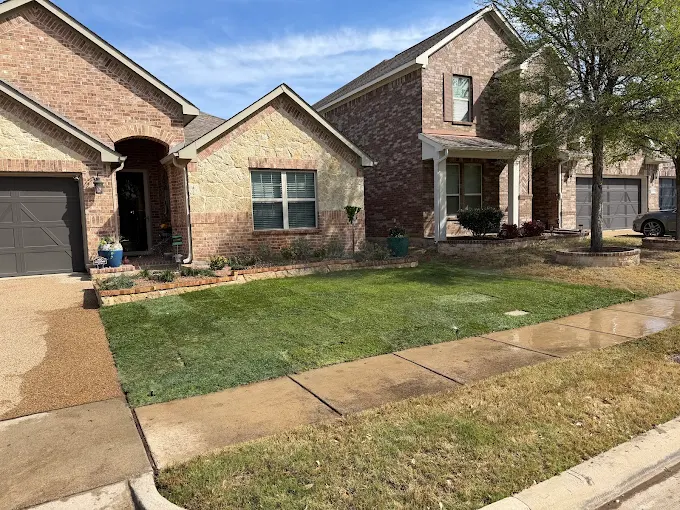
Lawn Sod Installation That Thrives in Every Season
If you’ve ever laid down sod in North Texas only to watch it “look fine” for a week—then thin out at the seams in the second and third week—you’re not alone. In Carrollton, that pattern usually isn’t bad luck. It’s what happens when sod is installed over clay-heavy soil that wasn’t prepped to accept roots (and when watering doesn’t consistently reach the soil underneath the turf).
A homeowner we worked with last spring described it perfectly: the lawn was green on day three, but by day sixteen the edges started to lift, and patchy areas appeared where sprinkler coverage was inconsistent. The fix wasn’t “better sod.” It was the combination of timing, soil preparation depth, and a watering plan that actually drives moisture into the root zone.
This is the kind of field problem sod installation should solve—when it’s done with the right grass, proper prep, and careful aftercare.
Quick Answer
For sod to thrive in every season in North Texas, you need three things:
- Correct grass for your sun/shade and use (Bermuda, zoysia, St. Augustine, or fescue depending on the site).
- Soil prep that reduces compaction and improves moisture contact before turf arrives.
- A first-3-weeks watering and fertilizing routine that encourages roots to grow into the soil, not just keep the blades green.
If you want help choosing grass and planning delivery/installation, start with a turf consultation so we match the sod to your yard conditions rather than guessing.
What We Commonly See in North Texas Lawns
North Texas lawns fight the same enemies over and over—heat, drought stress, and clay soil that holds water near the surface but resists root penetration when it’s compacted. In many Carrollton properties (especially older lots and newer construction with heavy equipment traffic), we see:
- Thatch and dead zones in transition areas where mowing patterns and shade change.
- Dry seams between sod strips after installation, caused by inconsistent irrigation coverage.
- “Greener-than-rooting” lawns, where sod stays alive temporarily but doesn’t establish strong contact with underlying soil.
A firsthand observation that explains a lot: when we lift a few corners of failed sod sections, the soil beneath is often barely moistened or still too hard to allow roots to knit. The sod can look alive aboveground while the root system never truly anchors.
Best Grass for North Texas Lawns
North Texas isn’t one single climate—your lawn’s performance depends on sun exposure, irrigation reliability, and how much foot traffic you expect. Here’s a practical way to think about it:
| Grass type | Typical fit in North Texas | What homeowners notice |
|---|---|---|
| Bermuda (common choice for sun-heavy yards) | Warm-season lawns with good sun | Holds up well with heat; can spread and thicken |
| Zoysia (slower start, dense coverage) | Lawns where you want a thicker “carpet” over time | Often lower mowing frequency; strong density once established |
| St. Augustine (shade-friendly but needs consistent care) | More shade and more regular irrigation | Looks lush; can struggle if watering is inconsistent |
| Fescue (cool-season option in some transitions) | Mixed conditions or overseeding strategies | Good color in cooler months; establishment depends on timing |
If you’re unsure what to choose, you can plan around the most important variable first: sun hours. Most Bermuda and zoysia problems we see come from yards being treated like they’re full sun when they’re actually a few hours short (especially in late afternoon).
A turf recommendation based on real yards
- If your yard gets 6+ hours of sun and you want durable summer coverage, Bermuda is often a strong fit.
- If your yard has mixed sun and you prefer dense, slower-growing turf once established, zoysia can work well.
- If you have more shade and can maintain regular irrigation, St. Augustine may be the better path.
Why Some Sod Fails After Installation
Sod failure in North Texas usually comes from one of these breakdown points:
1. Installation delays
Sod can dry out quickly once it’s rolled and exposed—especially during warm, windy days. If delivery arrives and installation gets pushed back, the turf can lose moisture before it ever touches your soil.
2. Insufficient soil contact
If the grade is off, the soil is uneven, or the base wasn’t leveled, sod edges can lift. Seams then dry faster and roots can’t knit across the gaps.
3. Watering that doesn’t reach the root zone
Homeowners often mist or lightly water because it “looks right” on top. But sod roots need moisture in the soil beneath the turf layer. When that doesn’t happen, the lawn stays green for a short window and then starts failing.
4. Poor irrigation coverage
One sprinkler head off by a few feet can create dry seams. We’ve seen this repeatedly on corner lots, narrow side yards, and properties with sprinkler systems designed for older grass types.
Common Mistakes That Keep New Grass From Rooting
Here are the mistakes we see most often—usually not because homeowners “did it wrong,” but because they didn’t have the right installation and watering plan for North Texas conditions.
1) Skipping soil prep depth
Raking and removing debris is helpful, but sod establishment depends on the condition of the soil underneath. If the base is compacted, roots can’t penetrate.
2) Installing sod over uneven grade
Low spots collect water and high spots dry out. Either way, you get inconsistent rooting and visible seam lines.
3) Waiting too long to adjust your watering schedule
Texas heat can change fast. During establishment, your schedule needs to reflect real evaporation and coverage—not just a guess.
4) Cutting sod too soon or tearing seams during layout
Sod edges should be snug. If seams open, they create “dry lanes” that become patchy areas later.
5) Using fertilizer incorrectly (or skipping it entirely)
Starter fertilizer can support early root growth, but it needs to be timed correctly with establishment. Overdoing it can stress young turf.
Sod Preparation, Installation, and Aftercare Checklist
This is the checklist we use to keep sod from drying out, lifting, or failing at seams. You can use it whether you’re planning your own install or coordinating professional sod installation services.
Before installation (prep phase)
- Confirm grade and remove debris (rocks, old roots, thatch buildup).
- Loosen and condition the soil where sod will sit. Clay-heavy areas often need extra attention to reduce compaction.
- Level the base so seams don’t create gaps.
- Plan your sprinkler coverage (run the system and check for uniform wetting).
During installation
- Install sod immediately after delivery.
- Keep pieces tightly aligned with minimal seam gaps.
- Avoid walking patterns that crush soil under edges.
- Roll the lawn if needed to improve soil-to-sod contact (especially on new base layers).
Watering the first 3 weeks (root establishment)
- Water deeply and consistently enough to moisten the soil underneath the sod—not just the turf surface.
- Adjust frequency as the sod roots. Early on, you may need more frequent watering; later you shift toward deeper, less frequent cycles.
- Monitor seams and edges daily during the establishment window. If they dry faster, your irrigation coverage needs adjusting.
Fertilizer and soil support
- Use starter fertilizer for new sod according to timing guidance.
- Consider compost for lawn as part of soil improvement (especially when you’re working with compacted or uneven ground).
Sod Delivery Planning: Pickup vs Delivery vs Full Install
Ordering sod is easy. Planning how it gets to your property (and when it gets installed) is where success is won or lost.
If you’re trying to coordinate multiple moving parts—getting materials, clearing the yard, and scheduling installation—delivery can reduce stress and help you keep sod from drying out.
- If you want to compare options, you can review sod delivery services and plan for the timing that matches your install day.
- If you’re handling pickup yourself, we also support local grass pickup support so you can fit it into your schedule.
- For yards that need an end-to-end approach, our professional sod installation services help ensure the prep and aftercare match what the turf needs.
When “fresh sod near me” matters
Fresh sod isn’t just about being newly cut. It’s about keeping the turf in a healthy moisture state from the time it’s harvested to the time it starts rooting. That’s why timing matters as much as the product.
A Realistic Project Example (Anonymized)
A few months ago, we worked with a homeowner replacing a patchy front yard that had dead spots after a summer stretch and a sprinkler change that never quite got corrected. The yard looked “green in the middle,” but the edges and seams stayed thin.
Here’s what we found during prep:
- The soil base was compacted in the areas where old grass had died, so roots struggled to penetrate.
- The sprinkler system created uneven moisture, especially along the driveway-side border.
- The homeowner had installed sod before fully verifying coverage uniformity.
What we did differently:
- We helped plan the grass sales for new lawns based on the sun pattern and expected use.
- We coordinated prep so the soil was ready before turf arrived.
- We set expectations for aftercare and emphasized seam monitoring during establishment.
Result: the lawn rooted more evenly. The seams stayed tight instead of opening, and the lawn thickened instead of thinning.
Carrollton and North Texas Relevance: Why Timing and Soil Contact Matter Here
North Texas heat accelerates everything. During establishment, even a short delay can move you from “healthy rooting” to “survival mode.” Clay soils also add a twist: the top can feel moist while the underlying layer remains too firm for roots to penetrate deeply.
In Carrollton yards, we often see better results when homeowners plan around:
- watering coverage uniformity (not just “the system turns on”)
- soil loosening and leveling before turf arrives
- installing quickly after delivery
- watering to reach the soil underneath the sod
That’s why we encourage homeowners to make the grass decision and the installation plan together. You can even start with a sod consultation for North Texas lawns so the grass choice matches your yard’s conditions before you order.
Ready to Repair or Replace Your Lawn With Fresh Sod?
If you’re dealing with dead grass, patchy seams, or a lawn that won’t thicken after previous attempts, fresh sod can absolutely help—when it’s matched to the right grass and installed with proper prep and aftercare.
About Your Local Grass Guy
Your Local Grass Guy provides sod sales, grass delivery, pickup options, consultations, and sod installation services throughout Carrollton, TX and surrounding North Texas communities. The company focuses on helping homeowners choose the right grass for local conditions, prepare lawns properly, and establish healthier turf through practical sod guidance, delivery support, and professional installation solutions.
Quick FAQ for Homeowners
How soon should sod be installed after delivery?
Sod should be installed as soon as possible after delivery—ideally the same day. If it sits too long, the turf can dry out or lose moisture before roots can begin forming contact with your soil. Warm, windy days make this especially important. If you’re coordinating scheduling, it’s worth planning delivery around your installation window so the turf stays in the best condition.
How often should I water new sod in Carrollton, TX?
During establishment, you typically water more frequently at first to keep the sod and the soil beneath consistently moist. The exact schedule depends on weather and irrigation coverage, but a common failure point is watering the surface without saturating the base enough for roots to grow. Watch seams and edges—if they dry faster than the center, your watering needs adjustment.
Should I use starter fertilizer for new sod?
Starter fertilizer is commonly used to support early root establishment, especially when sod is going into heavier clay soils. The key is timing and rate—too much or applying at the wrong stage can stress new turf. A consultation can help you match fertilizer timing to your grass type and installation date.
Can sod fix a patchy lawn quickly?
Sod can dramatically improve curb appeal quickly, but it won’t “fix” underlying issues like compacted soil, poor sprinkler coverage, or uneven grade. If those problems remain, you may see thinning later. The best results come from pairing sod replacement with correct prep and aftercare so the turf roots properly.
Is Bermuda or zoysia better for North Texas lawns?
Bermuda often performs well in full-sun yards and tends to establish faster with strong density in heat. Zoysia can be excellent for dense coverage and often requires less mowing once established, but it may feel slower to thicken at first. The best choice depends on your sun hours, watering consistency, and how quickly you need the lawn to look complete.