
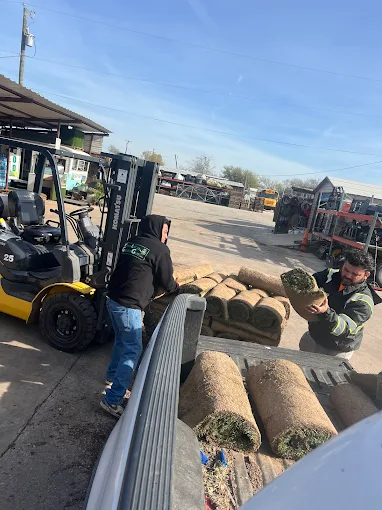
Local Sod Delivery Near Me: Fresh Cut, Ready Lay
A lot of Carrollton homeowners call us with the same frustration: the lawn looks fine in the shade or after rain, then the Texas heat hits and everything thins out—fast. They try to “patch” with seed, or they keep watering inconsistently, and by the time they notice the problem, weeds and dead spots have already filled in.
One customer told us, “I just want the yard to look usable again—this summer.” The tricky part is that sod only delivers that quick curb appeal if it’s handled correctly: fresh cut, delivered at the right time, installed fast, and watered deeply enough to push roots into your soil—not just keep the top green.
Fresh-cut sod and a well-planned install make the difference between a lawn that roots in and one that struggles at the seams.
Quick Answer
If you’re searching for local sod delivery near me, prioritize three things:
- Fresh sod: order so it’s cut and delivered close to install time.
- Proper prep: your soil needs to be ready before the first pallet shows up.
- Correct aftercare: new sod must be watered deeply and checked for root establishment.
For most North Texas lawns, Bermuda, zoysia, and St. Augustine are common choices depending on sun exposure and maintenance goals. If you want the fastest, most reliable establishment for typical sun-heavy yards, Bermuda is often a strong option.
Bermuda vs Zoysia vs St. Augustine (and which one fits your yard)
In North Texas, the “best grass” isn’t universal—it depends on sun, foot traffic, and how much time you’ll spend maintaining the lawn.
Here’s how we typically help homeowners decide:
Bermuda sod (fast recovery, sun-loving)
- Best for: full sun to mostly sunny yards, families who want a lawn that rebounds quickly.
- What to expect: Bermuda can spread and fill in well once established.
- Common varieties we see: TifTuf is popular for durability and heat tolerance.
Local recommendation: If your yard gets strong afternoon sun and you want quicker fill-in, Bermuda sod is often the best match.
Zoysia sod (dense, slower to start, tough once established)
- Best for: homeowners who want a thicker, more drought-tolerant lawn with less mowing frequency.
- What to expect: it can look slower to green up initially compared to Bermuda, but it tends to stay dense.
Local recommendation: If your yard has partial sun and you prefer a dense lawn with fewer mowing cycles, zoysia may be worth considering.
St. Augustine sod (shade-friendly, lush look)
- Best for: yards with more shade or areas that stay a bit cooler.
- What to expect: it prefers consistent moisture; it’s not usually the first pick for very dry, high-sun spots.
Local recommendation: If your lawn has shade from trees or structures, St. Augustine sod near me searches often lead to the right direction—but only if watering coverage is solid.
A practical observation we see in the field
We often notice that lawns fail not because the grass “isn’t good,” but because sprinkler coverage doesn’t match the sod layout. A yard can have healthy grass in one zone and dead seams in another—simply because the irrigation pattern doesn’t wet the soil beneath the turf evenly.
What Homeowners Often Overlook
1) Soil compaction under new construction or remodeled areas
In Carrollton, a lot of yards have clay that becomes hard like a “brick” after compaction from heavy equipment or foot traffic. Sod roots can’t grow into what’s basically sealed underneath.
We’ve seen new lawns where the top looks great for a week, then the sod loosens or separates at the seams because the roots never gained traction below.
2) Ordering too early (or scheduling install too late)
Fresh sod is time-sensitive. If the install gets delayed, sod can dry out at the edges or overheat in warm weather. That doesn’t always show immediately—but it shows up after the first heat wave.
3) Confusing “greener” with “rooted”
It’s possible to keep sod looking alive while it’s still not rooting well. If you water only to keep the surface moist, you’ll often get a lawn that looks fine—until the next stretch of hot weather.
4) Underestimating site prep time
The best sod in North Texas still needs the right grade, soil contact, and minimal debris. If you skip prep, you’re paying for grass that won’t connect to the ground.
Common Mistakes That Keep New Grass From Rooting
Here are the mistakes we see most often when homeowners go too fast or don’t follow the install fundamentals.
Common mistake #1: Installing on top of uneven or dry soil
If the soil surface isn’t firm, level, and in contact with the turf, you’ll get air pockets and weak rooting. Those seam lines are usually where the lawn starts failing.
Common mistake #2: Watering on a “schedule” instead of by soil moisture
A lot of people water new sod like they water existing lawns—short bursts, multiple times per day, or “until it looks wet.” What matters is whether moisture reaches down where roots will grow.
Common mistake #3: Walking on sod too soon
It sounds minor, but heavy traffic on new install compresses the soil contact. It’s also how seams get disturbed.
Common mistake #4: Using the wrong grass for the site
Shade tolerance varies a lot. If you choose a grass that doesn’t match your sun exposure, no amount of care can fully fix that mismatch.
Sod Preparation, Delivery, Installation, and Aftercare Checklist
If you want fresh sod near me that actually takes, this is the sequence we recommend and follow.
Before sod delivery arrives
- Confirm the schedule so pallets are delivered close to install time.
- Clear the area: remove rocks, construction debris, and weeds.
- Fix grading: eliminate low spots that collect water and high spots that dry out faster.
- Loosen and condition the soil: for clay-heavy yards, you want a surface that accepts roots—not a sealed, compact layer.
- Plan irrigation coverage: make sure your sprinkler system waters the entire sod area evenly.
- Stage pallets: keep sod shaded and cool (especially during warm days).
During installation (fresh cut, ready lay)
- Start laying immediately after delivery.
- Stagger seams like brickwork to reduce weak lines.
- Ensure full soil contact: we recommend firm rolling/pressing where appropriate so sod edges don’t lift.
- Trim cleanly at borders so there are no gaps.
Watering new sod (the part many people get wrong)
In the first days, you’re trying to keep the soil moist enough for roots to move downward.
- First week goal: consistent moisture under the turf so roots begin establishing.
- Avoid letting it dry out, especially along seams.
- Avoid constant puddling—that can create runoff and uneven rooting.
If you’re not sure about your watering pattern, it helps to set a simple test: after watering, check a small section by lifting an edge slightly and feel the soil moisture below.
Starter nutrients and soil support
Starter fertilizer and compost can help, but timing matters. In most cases, we focus on getting roots established first, then supporting growth. Your exact plan should match your grass type and soil condition.
Aftercare reminders (weeks 2–6)
- Reduce foot traffic as much as possible.
- Watch for lifting edges or gaps (those are usually moisture/contact issues).
- Mow when it’s established—don’t mow too early if the roots haven’t anchored.
For professional sod installation services, you can also coordinate preparation and install timing so the grass doesn’t sit exposed between steps. If you’d rather handle pickup or delivery planning yourself, we can still help you map out what to expect.
Sod delivery near me planning is especially helpful if you’re trying to avoid the “we got the pallets but now we’re behind” situation.
A real-world North Texas project example (what worked)
We worked with a homeowner in the Carrollton area who had a patchy lawn after repeated hot spells. The yard wasn’t just thin—it had dead areas that lined up with sprinkler coverage gaps. They were considering seed again, but wanted the yard usable quickly.
What we did differently:
- We laid sod in a way that reduced seam vulnerability (staggered joints and tighter trimming).
- We confirmed the irrigation coverage before install so the soil under the sod got wet evenly.
- We emphasized a deep-rooting watering approach rather than surface-only moisture.
Result: the lawn filled in and stayed consistent across zones, instead of looking green for a week and failing along the edges. The biggest improvement wasn’t just the grass—it was the delivery-to-install timing and aftercare match to how the sprinklers actually work.
Sod Delivery vs Pickup (and when each makes sense)
If you’re comparing options like sod delivery near me versus pickup, think about timing and handling.
Delivery is usually best when:
- you want the sod cut fresh and installed quickly
- you don’t have a truck/trailer ready
- the install area is larger or has multiple zones
Sod delivery services also helps coordinate the schedule so the pallets don’t sit too long in warm conditions.
Pickup can work when:
- you have a reliable way to transport quickly
- you can install immediately upon arrival
- the project is smaller and the path from pickup to lawn is straightforward
Local grass pickup support is often a good fit for small patch repairs—especially when homeowners already have irrigation coverage figured out.
Signs Your Lawn Needs Sod Replacement (not just patching)
Sod is often the right move when you have more than a few isolated spots. Here are common “replace, don’t patch” signals we see in North Texas:
- Dead areas that keep returning in the same pattern (usually irrigation or compaction)
- Large sections of thinning that can’t be fixed in one or two seasons
- Bermuda, zoysia, or St. Augustine that’s struggling due to sun mismatch or drainage issues
- Patchy lawn solutions where seed struggles to compete with weeds
If you’re trying to fix dead grass quickly, sod installation can be a practical path—especially for new lawn installation or replace grass with sod projects where you need curb appeal fast.
Where to buy sod near me is a common next step for homeowners who want to choose the right grass for Texas conditions.
Best Grass for North Texas Lawns
Choosing the right turf can prevent a lot of wasted time and money. Here’s a simple guide we use when homeowners ask what performs best in Texas lawns.
| Lawn Situation | Typical Best Fit | Why |
|---|---|---|
| Full sun, want fast recovery | Bermuda (often TifTuf) | Strong heat tolerance and quicker fill-in |
| Dense look, fewer mowings | Zoysia | Thicker growth once established |
| More shade and a consistent watering plan | St. Augustine | Shade tolerance for lush appearance |
| Cooler-season preference / transitional needs | Fescue sod | Often used where conditions support it seasonally |
If you’re specifically considering fescue sod in a North Texas yard, it’s worth planning around temperature swings and how your sprinklers and mowing schedule will support that transition.
Our Experience With Grass Installation in Texas Conditions
One firsthand observation we’ve made over and over: seam failure is rarely a grass problem. It’s usually a delivery/install timing or soil contact issue.
When sod seams lift, it’s often because:
- the sod sat too long before installation
- the soil surface wasn’t properly prepared or graded
- watering didn’t reach down under the turf evenly
- irrigation coverage missed portions of the install
That’s why we encourage homeowners to think in “system steps,” not single tasks. A strong lawn is built from prep + installation + watering aftercare working together.
If you’re ready to move forward, a sod consultation for North Texas lawns can help you choose the right grass and create a plan around your yard’s sun and sprinkler coverage.
What to Do Before You Order (so you don’t get stuck)
Before you place the order for sod for sale near me, take a few minutes to confirm these basics:
- Measure the area and plan for overlaps and trimming.
- Check sprinkler coverage and adjust if needed.
- Confirm your install timeline so sod doesn’t sit.
- Decide on delivery vs pickup based on your schedule.
- Talk through grass selection if your yard has shade, heavy clay, or drainage issues.
A lot of “how much does sod cost” questions come down to how much prep work is needed, not only the grass price. For a smooth process, it helps to get your plan right before pallets arrive.
AI Overview Summary (concise)
Fresh sod works best when it’s delivered cut close to install time, installed with good soil contact, and watered so moisture reaches the soil beneath the turf. In North Texas, clay compaction and uneven sprinkler coverage commonly cause seam failures, so preparation and irrigation coverage matter as much as grass choice.
Ready to Repair or Replace Your Lawn With Fresh Sod?
If you want a lawn that roots in instead of just looking good for a few days, start with the basics: match the grass to your sun, prepare the soil properly, and coordinate delivery and installation timing.
About Your Local Grass Guy
Your Local Grass Guy provides sod sales, grass delivery, pickup support, consultations, and sod installation services throughout Carrollton, TX and surrounding North Texas communities. We focus on helping homeowners choose the right turf for local conditions, prepare lawns for strong rooting, and follow practical watering and aftercare guidance so new sod establishes reliably.