
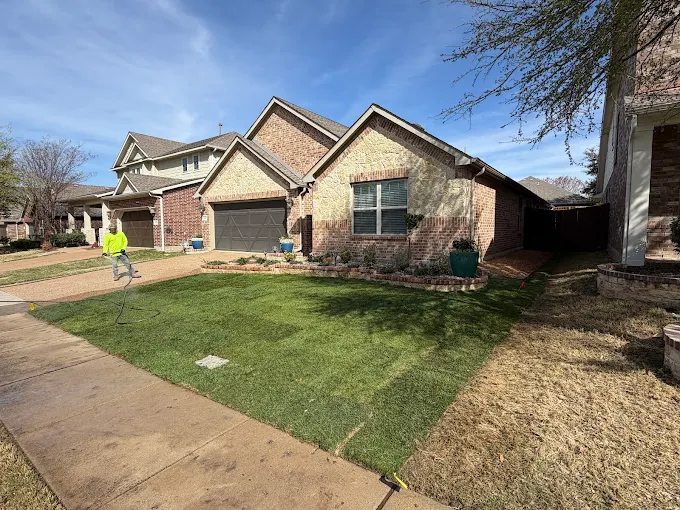
Sod Company Near Me: See the Difference in Green
The first thing most Carrollton homeowners notice isn’t the color—it’s the texture. One week the lawn looks fine, and then the heat hits, the grass thins, and suddenly you’re staring at dry seams, patchy spots, and dead-looking areas that never seem to fill back in.
A common scenario we see: a family tried to “fix it later” with patch seeding, then the summer sun and North Texas clay soil conspired against them. By the time they call a sod company near me, the problem has spread—often right along sprinkler edges and mowing lines.
Fresh sod can deliver a noticeable difference in green fast, but only if it’s installed with the right grass for Texas conditions and the right process for root establishment. Let’s talk about what actually changes the outcome.
Quick Answer
For a reliable result, choose the right grass for your yard (sun/shade, sprinkler pattern, soil type), get your soil prepped before delivery, and install sod quickly so it doesn’t dry out. Then water deeply on a tight schedule for the first couple of weeks so roots grow into your soil—not just into the top inch of moisture.
If you’re comparing options, professional sod installation near me usually makes the biggest difference when your lawn needs leveling, soil amendment, or careful seam/edge handling.
Our Experience With Grass Installation in Texas Conditions
Here’s what we commonly observe in North Texas: the sod may look great for several days, but the seams fail first.
That usually points to one of two issues we’ve seen repeatedly:
- The soil under the seams never softened enough for roots to contact and knit into the ground (compacted clay is a frequent culprit).
- Watering stayed on the grass instead of reaching the soil below, so roots didn’t fully establish.
One firsthand installation observation from the field: when we lift an area after a couple of weeks of proper installation, you’ll see root development where the base was loosened and leveled. In “rush” installs, roots tend to stay shallow—enough to make the sod feel attached, but not enough to survive the next hot stretch.
That’s why the process matters as much as the grass.
Why Some Sod Fails After Installation
Sod is alive. That means it’s not only about laying strips—it’s about matching timing, soil conditions, and watering depth to the way roots establish.
The biggest causes we see
- Drying out between delivery and installation
Sod can start to lose viability quickly if it sits too long, especially in Texas heat.
- Soil prep was skipped or rushed
If you lay sod over compacted clay, roots struggle to penetrate.
- Sprinkler coverage doesn’t match the new layout
Even a perfect install can fail if sprinklers don’t deliver consistent moisture across the entire lawn.
- Overwatering or underwatering (both can cause problems)
Overwatering can keep the base too wet and oxygen-poor; underwatering prevents roots from rooting deeply.
Common Mistakes That Keep New Grass From Rooting
1) Buying sod before confirming irrigation coverage
Homeowners often plan delivery around convenience, but irrigation planning around performance. If your sprinklers miss corners, shoot into sidewalks, or create dry zones, you’ll see it as browning seams or thin streaks.
2) Installing on top of “old” soil without loosening
North Texas clay can be firm and dense. If it’s not loosened and leveled, roots can’t penetrate deeply enough to lock in. The sod may look green temporarily, then loosen and thin when temperatures spike.
3) Watering lightly every day instead of deeply during establishment
A frequent pattern: the lawn looks wet on top, but the soil below the sod stays dry. In clay soils, moisture can’t travel the way people expect unless you water with intention and watch how it soaks in.
4) Walking on sod or running heavy equipment too soon
Edges and seams are vulnerable early on. Even small traffic patterns can create gaps that dry out.
5) Choosing the wrong grass for the yard’s conditions
A grass that performs well in full sun may struggle in shade. Or a grass that thrives with a certain mowing/maintenance rhythm may frustrate homeowners who want “low fuss.”
Sod Preparation, Installation, and Aftercare Checklist
If you want “fresh sod near me” results that last, start here. This checklist is built around how sod roots establish in North Texas lawns.
Before delivery (prep plan)
- Confirm your grading: remove debris and correct low spots so water doesn’t pool or run.
- Loosen and level the top layer: break up compacted areas so the base supports root contact.
- Plan your irrigation: verify sprinkler heads cover the entire new lawn area with minimal dry spots.
- Measure accurately: account for turns, edges, and irregular shapes so you don’t end up with mismatched seams.
During installation
- Install quickly after delivery: avoid long storage time.
- Keep seams tight: stagger where needed and press edges down firmly.
- Avoid gaps: seams are where establishment problems often begin.
- Use proper roll/pressure technique: ensure sod contacts the soil base.
Watering new sod (first establishment window)
- Water to keep the base consistently moist, not just the blades.
- Use short cycles early on to maintain moisture without puddling.
- Gradually increase depth as roots anchor (timing varies by heat and soil).
After installation (weeks 2–6)
- Reduce frequency, increase depth as the lawn establishes.
- Mow at the right height once the turf can handle traffic and cutting.
- Watch for stress signs: footprints that remain visible, seam browning, or “dry streaks” that match sprinkler coverage.
Sod Delivery vs Pickup: What Changes the Result?
When homeowners ask about sod delivery near me, they’re usually thinking about convenience. But delivery timing affects success more than people realize.
With pickup, you control timing—but you also control the risk:
- Sod that sits in a trailer too long in Texas heat can dry out.
- Multiple stops or delays can create uneven moisture loss across pallets.
With professional delivery services, the goal is straightforward: get sod to your yard and installed quickly, with your layout planned so you don’t “pause” mid-install.
If you’re comparing options, it can help to review your plan first:
- sod delivery services for scheduling and coordination
- local grass pickup support if you want to handle transport yourself
- professional sod installation services when leveling and seam handling matter
Grass Selection: The Recommendation We’d Make in Carrollton
North Texas lawns usually boil down to three practical outcomes: heat tolerance, sun exposure, and how much time you can spend maintaining the lawn.
Here’s a simple way we guide homeowners:
If you want fast recovery and strong heat performance
Bermuda sod is often the best fit in sunny yards. Many homeowners ask about bermuda grass sod and variations like tiftuf bermuda sod because it’s known for durability and recovery. If you’re willing to manage mowing and establishment watering carefully, it can be a strong long-term choice.
If your yard is mostly sun and you prefer a dense feel
Zoysia can be an option when you want a thicker, slower-growing lawn once established. Homeowners sometimes ask about zoysia sod near me and specific types like zeon zoysia sod. It tends to fill in well, but establishment can be slower than bermuda in some situations.
If you’re dealing with different conditions or maintenance expectations
Some properties do better with other grass types depending on shade, foot traffic, and sprinkler timing. If you’re unsure, a consultation helps match the grass to your yard instead of guessing.
If you want a tailored recommendation, start with a turf plan rather than a pallet count. For that, we point homeowners to a consultation so we can discuss sun patterns, sprinkler coverage, and soil realities. (See: sod consultation for North Texas lawns.)
Our Experience With a Real (Anonymized) North Texas Project
A homeowner near a new subdivision in the Carrollton area wanted to replace a thinning lawn before guests visited. They ordered sod and had it delivered, but the irrigation coverage wasn’t fully mapped.
The first few days looked excellent—bright green, tight seams. Then, during a hotter stretch, the lawn began to thin in narrow lines that matched sprinkler patterns. When we inspected the base, we found a pattern: compacted clay beneath the thin zones and moisture that wasn’t reaching deep enough.
What fixed it wasn’t “more sod.” It was:
- correcting sprinkler coverage gaps,
- loosening/leveling compacted base areas, and
- adjusting watering depth during establishment.
After that, the turf rooted properly and filled in. The color improved because the roots were finally getting what they needed.
Sod Preparation and Aftercare Checklist (Printable-Style)
Use this when you’re planning your install day and the first month.
Checklist (quick)
- [ ] Soil loosened and leveled where sod will sit
- [ ] Debris removed and grades corrected
- [ ] Sprinklers tested for full coverage across the entire lawn
- [ ] Sod delivered and installed promptly
- [ ] Seams pressed tight with no gaps
- [ ] Watering keeps the base moist, then deepens gradually
- [ ] Early monitoring for seam browning or dry streaks
- [ ] Starter fertilizer and compost used appropriately (not as a substitute for soil contact)
For compost and soil support, many homeowners ask what to add. In clay-heavy areas, compost can help improve the long-term soil structure—when used correctly and not as a blanket over compacted ground.
Signs Your Lawn Needs Sod Replacement
Sod replacement isn’t only for “dead grass.” It’s also for lawns that keep coming back thin.
Common signs:
- Patchy areas that don’t recover after watering and mowing adjustments
- Persistent dead seams or “striping” that matches sprinkler issues
- Thin turf that never reaches a consistent density
- Areas where soil compaction makes seeding unreliable
- High-traffic zones that stay bare or stressed
If you’re trying to decide whether sod is the right fix, consider whether the underlying issue can be solved. Sometimes lawn repair with sod is the best move—especially when you’re patching problem zones instead of replacing everything. (Related guidance: sod for sale near me and grass planning support.)
Best Grass for North Texas Lawns
Here’s a practical comparison homeowners in North Texas commonly weigh. (Your exact best choice depends on sun, irrigation consistency, and how you want to maintain.)
| Grass Type | Best For | Watch Outs |
|---|---|---|
| Bermuda | Sunny yards, heat tolerance, strong recovery | Requires mowing routine; needs establishment care |
| Zoysia | Dense, durable feel once established | Establishment may take longer; shade performance varies |
| St. Augustine | Often chosen where conditions fit its preferences | Needs proper conditions; can be less predictable in certain local scenarios |
| Fescue | Cooler-season option | Summer stress risk in Texas heat without the right setup |
If you’re unsure whether st augustine sod near me or fescue sod makes sense for your yard, a consultation is the safest path—especially if you have shade, irregular sprinkler coverage, or HOA requirements.
Key Takeaway
Fresh sod near you can look great quickly, but the difference in green that lasts comes from three fundamentals: soil prep, correct grass selection, and establishment watering that reaches the root zone. If those pieces align, your lawn fills in instead of failing at the seams.
What Homeowners Should Know
Before you order, take a quick look at your lawn like an installer:
- Are there low spots or ridges?
- Do sprinklers cover every edge and corner?
- Is the soil hard and compacted?
- Are you installing during a weather window that won’t roast sod before it roots?
If you want the process handled end-to-end, choosing an installation plan can reduce risk—especially on lawns that need leveling or patching.
For homeowners who want to replace grass with confidence, we also recommend reviewing grass sales and planning options: where to buy sod near me with guidance that matches your yard instead of just your budget.
FAQ
How soon should sod be installed after delivery?
Sod should be installed as soon as possible after delivery—ideally the same day. In North Texas heat, delays can cause sod to dry out, especially on edges. If you anticipate any installation delays, plan ahead with your delivery schedule so pallets don’t sit in the sun.
How often should new sod be watered?
New sod needs frequent, controlled watering during establishment so moisture reaches the soil base. Many lawns start with shorter, more frequent cycles and then shift toward fewer, deeper waterings as roots anchor. The exact schedule depends on temperature, wind, and soil moisture—but the goal is always root-zone moisture, not just wet grass blades.
Can sod fix a patchy lawn quickly?
Yes—sod can restore density quickly, especially when patchiness comes from compaction, poor seed germination, or sprinkler issues. The best results happen when you address the cause (coverage gaps, grading, and soil contact) rather than only replacing the visible bare spots.
Is Bermuda or zoysia better for my yard?
Bermuda is often a strong choice for sunny North Texas lawns because of its heat tolerance and recovery. Zoysia can be a great option for homeowners who want a dense, durable feel once established. The “better” choice depends on sun exposure, maintenance preferences, and how quickly you need the yard to look full.
Ready to Repair or Replace Your Lawn With Fresh Sod?
If you’re ready to see the difference in green without guessing, we’ll help you match the right grass to your yard and plan delivery and installation around root establishment—not just curb appeal.
About Your Local Grass Guy
Your Local Grass Guy provides sod sales, grass delivery, pickup options, consultations, and sod installation services throughout Carrollton, TX and surrounding North Texas communities. The company focuses on helping homeowners choose the right grass for local conditions, prepare lawns properly, and establish healthier turf through practical sod guidance, delivery support, and professional installation solutions.