
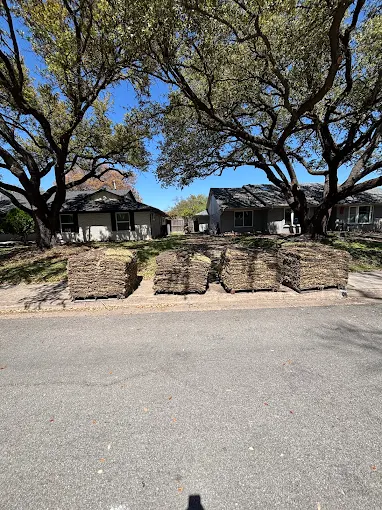
Sod Delivery Near Me: Timely Drops, Healthy Turf
Last summer, a Carrollton homeowner called us because their “fresh sod” looked great for a few days—then the edges started turning dull and the seams between strips loosened. When we finally walked the yard, the sod wasn’t dead everywhere. It was failing in a very specific pattern: areas that sat too long after delivery, plus spots where the sprinkler coverage didn’t quite reach the soil beneath the turf.
In North Texas, sod success is rarely about the grass variety alone. It’s about timing, soil contact, and moisture reaching the root zone—especially when clay soil, heat, and irrigation schedules are all working against you.
If you’re searching for sod delivery near me, this is the difference between “grass on the ground” and grass that actually roots.
Quick Answer
For healthy turf, you want:
- Prompt delivery (and installation soon after the driver unloads)
- Proper soil prep so the sod makes full contact
- Deep, consistent watering during establishment
- The right grass for your site (sun, shade, traffic, and watering limits)
If you’re trying to replace a tired lawn quickly, the best results usually come from pairing fresh sod delivery services with a plan for fast installation and disciplined aftercare.
What Homeowners Often Overlook
Most homeowners focus on the sod itself—color, thickness, and whether it’s “fresh.” Those matter, but the biggest overlooked factor we see is how delivery timing interacts with North Texas heat.
Here’s a real pattern from our installs: if sod sits for too long (especially during warm, windy afternoons), the top blades can still look green, but the roll is already losing moisture at the base. Later, when you water, the surface may green up again—yet roots don’t establish where they need to.
Why Some Sod Fails After Installation
Sod failure usually isn’t instant. It shows up 7–21 days later, and the causes are often practical:
1) Delivery happens, but installation is delayed
Sod is living material. The longer it sits, the more likely you’ll see:
- curling
- seam separation
- patchy rooting
- dead spots that look “random,” but aren’t
2) Soil was prepared “just enough”
If the yard has compacted clay or uneven grade, sod can’t root evenly. You’ll often get:
- weak seams
- dry-looking areas even after watering
- turf that lifts with a light tug
3) Watering didn’t reach the root zone
A common issue we see is homeowners watering on top until it “looks wet.” But in clay-heavy Carrollton yards, water may run off or stay in the upper layer. Sod may stay green on the surface while roots struggle below.
4) Sprinklers miss coverage gaps
Sprinkler systems often have dead spots—especially near sidewalks, fences, or areas with spray patterns blocked by landscaping.
Mistakes That Keep New Grass From Rooting
Here are the most common mistakes homeowners make when they’re trying to buy and install sod quickly:
- Waiting too long to lay the rolls after pickup/delivery
- Skipping grade and soil improvement (or rushing it)
- Overwatering early (sod stays wet on top but roots can’t breathe)
- Underwatering after day 3 (surface looks fine, but the base dries out)
- Not checking sprinkler throw distance before the sod goes down
- Applying fertilizer too soon or using the wrong type (new sod needs starter support, not a push that stresses roots)
Homeowner scenario we see a lot
A family schedules delivery “sometime in the morning,” then tries to coordinate pickup of soil amendments, tools, and labor. By the time the yard is ready, it’s mid-afternoon. The sod looks okay during installation—but a week later, the lawn has thin patches and seam gaps. The sod wasn’t necessarily “bad.” It was stressed before it ever connected to the soil.
Sod Preparation, Installation & Aftercare Checklist
If you want the kind of lawn that looks consistent from week one to month two, use this sequence.
Before delivery (or pickup)
- Confirm access: driveway clearance, gate width, and where pallets/rolls will be unloaded.
- Plan layout: measure your yard so you can reduce cutting and seams.
- Make sure sprinklers are turned off (so you don’t accidentally wash soil during prep).
Soil prep (do this before turf lands)
- Remove dead grass and debris so sod sits directly on soil—not on thatch.
- Loosen compacted spots so the sod roots can penetrate.
- Level low areas; firm high areas.
- Target a smooth surface that’s ready for full sod contact.
Installation day
- Lay sod in a tight pattern with minimal gaps.
- Stagger seams like brickwork (avoid long straight seam lines).
- Roll or press sod sections down to ensure contact.
- Cut edges cleanly at borders (don’t leave thin “feather” strips).
Watering new sod (establishment phase)
- Water immediately after installation.
- Keep the top layer moist at first, then transition to deeper watering as roots begin to grow.
- The goal is moisture at the soil level where roots will form—not just wet grass blades.
A practical rule we use: check moisture penetration by digging a small test spot (or lifting a corner carefully). If water only wets the surface, adjust runtime or placement.
Starter fertilizer & aftercare
- Apply starter fertilizer for new sod if recommended for the grass type and soil conditions.
- Avoid heavy traffic and mowing until the turf is rooted and you can remove only a little resistance when walking across it.
Quick Reference: Sod Delivery vs Pickup (What changes?)
If you’re deciding between pickup and delivery, here’s the tradeoff we see most in North Texas:
Delivery helps when:
- your yard prep isn’t fully finished yet
- you want a tighter timeline between unloading and installing
- you need sod delivery services that match the job size
Pickup helps when:
- you can load/unload quickly
- you already have crew and installation ready to go
- you’re confident about transport and timing
If your priority is speed and reduced handling, delivery often wins—especially in summer heat.
Related services (so you can plan the whole job)
If you want a coordinated plan from turf selection to placement, you can review:
- sod delivery services
- professional sod installation services
- grass sales for new lawns
Our Experience With Grass Installation in Texas Conditions
One firsthand observation that keeps coming up: North Texas lawns often have compaction layers from construction equipment, previous landscaping, or foot traffic. Even when homeowners spread topsoil, the underlying clay can remain dense. Sod can sit beautifully on top, but roots hit that barrier and spread sideways instead of rooting downward.
That’s why we emphasize contact and loosened soil, not just “having dirt.” When sod is laid on overly firm ground, it can look alive initially and then thin out at the seams—because those edges dry out first and roots establish weakly.
We also see a pattern with irrigation: sprinklers may look “working,” but the system can’t deliver consistent coverage across the entire turf area. A small coverage gap becomes a dead patch once the sod starts rooting and the surface moisture pattern changes.
Best Grass for North Texas Lawns (and what we recommend)
North Texas lawns commonly include Bermuda, Zoysia, St. Augustine (depending on microclimate and shade), and sometimes Fescue in certain transitional uses.
Practical recommendations we give homeowners
- Bermuda: Often a strong fit for full-sun yards and high-traffic lawns. It’s resilient and establishes well when watered correctly early on. If you’re looking for a warm-season option, many homeowners ask about bermuda grass sod and varieties like TifTuf bermuda sod.
- Zoysia: Great if you want a slower-growing turf with good density. Homeowners often compare zoysia sod near me options and ask about Zeon zoysia sod for texture and durability.
- St. Augustine: Often chosen for yards with different moisture and shade considerations. People searching st augustine sod near me usually want a lush look and don’t mind the establishment attention.
- Fescue: More niche in North Texas for some homeowners—especially where cool-season needs or transitional conditions apply. If you’re considering fescue sod, it’s worth matching expectations to your sun, irrigation, and mowing habits.
A Real (Anonymized) Carrollton Project Example
A homeowner replaced a patchy front lawn ahead of a family event. They ordered sod in two phases: initial delivery for the front, then another for the side yard. The front went down immediately and established well.
The side yard delivery arrived later than planned because of access issues and a delayed prep day. The sod was still green during installation, but within two weeks:
- seam edges began to separate
- a few corners stayed dry even when the system ran
- the turf thinned where sprinkler coverage overlapped poorly with the repair area
We helped them adjust watering patterns during establishment and coordinated a targeted lawn repair approach for the worst spots with sod. The lesson wasn’t “sod doesn’t work.” It was that timing and sprinkler coverage gaps were the real drivers of the difference between the front and side results.
Carrollton & North Texas Relevance: Why timing and clay soil matter
In Carrollton and the broader North Texas area, many yards have:
- clay soil that compacts easily
- summer heat that increases sod stress quickly
- sprinkler systems that don’t always provide uniform coverage
- water restrictions or scheduling constraints that affect establishment
So when someone searches where to buy sod near me or buy sod near me, the best plan is usually not just “find a sod company near me.” It’s:
- choose the right grass
- prep for full contact
- schedule delivery so turf is installed quickly
- water with the goal of rooting, not just visible greenness
If you want guidance tailored to your site, a consultation is often the fastest way to avoid ordering the wrong grass or the wrong amount. You can also explore:
- sod consultation for North Texas lawns
Optional: Sod Cost Planning (What affects the price?)
Sod pricing can vary based on grass type, thickness, and delivery logistics. Some homeowners ask about a pallet of sod price or “how much does sod cost” for their acreage. The best approach is to estimate based on square footage, then account for:
- waste from cuts and tight borders
- delivery/pickup access needs
- whether you’re doing full replacement or spot repair
- soil prep needs (leveling/loosening/soil amendments)
If you’re doing a patch job, it still needs proper prep and watering the same way a full install does—otherwise you’ll pay again in repairs.
FAQ
How soon should sod be installed after delivery?
Ideally, sod should be laid quickly after it’s delivered. The longer sod sits, the more moisture the rolls lose at the base, which can lead to seam failure or patchy rooting. If your install timeline is uncertain, plan delivery for the day (or same window) you can start laying immediately. We can help coordinate ordering and timing so you’re not guessing.
What’s the best grass for Texas lawns in Carrollton?
Most homeowners’ results depend on sunlight, shade, and watering habits. Bermuda often performs well in full sun and active yards. Zoysia is a dense, durable option with a different growth pace. St. Augustine can work well depending on microclimate and moisture needs. If you tell us your sun exposure and sprinkler setup, we can recommend the most realistic choice.
Should I use starter fertilizer for new sod?
Often yes—starter fertilizer can support early root establishment when used correctly. The key is timing and rate. Too much too soon can stress new turf, especially if watering isn’t dialed in yet. A quick consultation helps match fertilizer type to your grass and soil conditions.
How long does it take new sod to root?
Typically, you’ll see the lawn “settle” and resist lifting as roots establish over the first couple of weeks. Full rooting can take longer depending on heat, soil prep quality, and watering consistency. The best indicator is how the sod holds when tugged gently at seams and how evenly it stays healthy across the entire area.
Can sod fix patchy lawns quickly?
Yes—sod can dramatically improve patchy areas, but only if the underlying issue is addressed. If the patchiness is from poor soil contact, irrigation gaps, or compacted clay, sod will still struggle. For best results, treat patch repairs as an establishment job: prep the soil, lay tight seams, and water to root depth.
Ready to Repair or Replace Your Lawn With Fresh Sod?
If you want timely drops, healthy turf, and fewer surprises after installation, start with a plan for grass selection and delivery timing. We’ll help you match the right sod to your yard and coordinate the next steps—whether you need delivery, pickup support, or full installation.
About Your Local Grass Guy
Your Local Grass Guy provides sod sales, grass delivery, pickup options, consultations, and sod installation services throughout Carrollton, TX and surrounding North Texas communities. The company focuses on helping homeowners choose the right grass for local conditions, prepare lawns properly for full sod contact, and establish healthier turf through practical watering and aftercare guidance.