
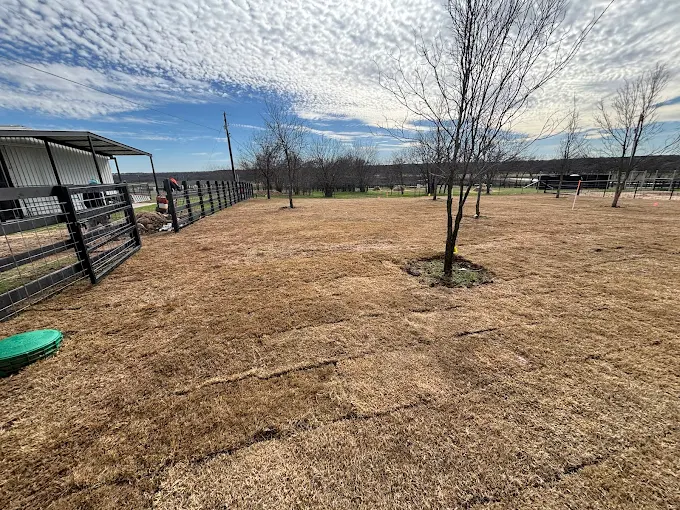
Lawn Sod Installation for Thick, Even Coverage Everywhere
If your Carrollton lawn looks great in the middle but turns patchy around edges, seams, and foot-traffic areas, you’re not alone. A lot of homeowners choose sod because they want a thicker, more even yard fast—then they discover the “pretty top” doesn’t always mean the roots are establishing the same way across the whole lawn.
We see this most often after summer heat stress, sprinkler coverage gaps, or when compacted North Texas clay isn’t prepared deeply enough. The result is familiar: sod starts out lush, but a few weeks later the seams open up, blades thin in certain spots, and dead patches appear where you’d least expect them.
The good news? Thick, even coverage is very achievable—if you install with the right base, handle delivery timing correctly, and water for root growth (not just surface appearance).
Quick Answer
For thick, even sod coverage, the two biggest drivers are soil preparation and installation quality. Make sure the grading is correct, the soil is loosened to allow root penetration, and sod is installed quickly after delivery with seams tight and rolled down. After installation, water deeply and consistently so moisture reaches the soil beneath the sod—not just the top layer. Choose grass that matches your light, foot traffic, and Texas heat exposure.
What We Commonly See in North Texas Lawns
In Carrollton and the surrounding North Texas area, lawns often struggle because of a few repeating realities:
- Clay-heavy soil compacts fast. Even if your lawn looks level, the ground underneath can be hard and dense. Roots meet resistance and don’t spread evenly.
- Sprinklers miss coverage zones. Many systems water “enough” for existing grass, but new sod is sensitive—dry seams show up quickly.
- Shade and heat combine. Under mature trees or near structures, the lawn can stay cooler but also dry differently. That uneven moisture can create uneven establishment.
A firsthand installation observation we run into
When we lift a failed sod section during a replacement job, the pattern often tells the story. You’ll see roots that are shallow and stop at a compacted layer, especially where the grade was rushed or soil was only scratched on top. The sod may be green on top, but it hasn’t knitted into the base the way it should. That’s why “thick and even everywhere” requires more than just laying pallets—it requires preparing the ground for consistent rooting.
How to Get Thick, Even Coverage With Sod (Step-by-Step)
Thick sod isn’t just about the grass variety—it’s about how the lawn establishes, fills in, and stays consistent across the entire site. Here’s how we plan and install for uniform coverage.
1) Start with the right grass for your yard’s conditions
Before sod is ordered, we match grass type to real conditions:
- Sun vs. shade: Some grasses handle shade better than others, but none love consistently dry shade.
- Foot traffic: Front yards and play zones behave differently.
- Watering reliability: If your sprinkler coverage has weak heads or tight scheduling, that impacts which grass performs best.
If you’re choosing between popular options (like Bermuda, zoysia, St. Augustine, or fescue), the “best” choice depends on how your yard actually behaves in Texas heat.
2) Grade matters more than most homeowners think
Sod seams open up and edges dry out when the grade has:
- low spots that hold water,
- high spots that shed it,
- or slopes that cause inconsistent runoff.
We aim for a surface that stays consistent and firm underneath, so the sod sits flat with minimal gaps.
3) Prepare the base for root penetration (not just a “top dressing”)
A common field issue in North Texas is that lawns get “prepared” by lightly turning or scratching the top few inches—then sod goes down. That might look good for a week, but compacted clay remains beneath.
For thick, even coverage, the base needs to be workable enough for roots to move downward and outward. In practice, that means:
- removing debris and thatch,
- breaking up compacted areas,
- and leveling with appropriate material so the final surface is smooth.
4) Install quickly and keep seams tight
Sod is a living product. The faster it goes from delivery to installation, the better the chances it roots evenly.
During install:
- Keep rolls/pieces snug with minimal seams.
- Stagger seams like brickwork when possible.
- Avoid stretching sod—stretched turf often shrinks back and leaves gaps.
5) Roll and firm the contact
Rolled seams and firm contact reduce air pockets and speed up rooting. If the base is too soft or too dry, contact isn’t consistent, and seams become the weak points.
6) Water for roots: deep, then adjust based on how it’s establishing
For first-time sod, the temptation is to water “a lot” until it looks alive. But thick coverage comes from water that reaches the soil underneath consistently.
We usually guide homeowners to:
- water enough to keep the sod surface and base moist during the establishment window,
- then gradually transition toward deeper, less frequent watering once roots take hold.
If you’re unsure about your watering plan, see our aftercare guidance under local resources—or talk through your sprinkler layout with us first.
Mistakes That Keep New Grass From Rooting
Here are the common mistakes we see that directly lead to patchy seams, thin spots, and uneven thickness.
Common mistake homeowners make: watering by appearance instead of moisture penetration
A sod lawn can look green while the base stays too dry. In North Texas clay, moisture often doesn’t spread evenly if the soil is compacted or if water pressure/coverage is inconsistent.
What it looks like: sod looks fine for a few days, then edges dry out, seams open, and the lawn thins unevenly.
How to prevent it: verify sprinkler coverage and watering depth. If you can, run a quick catch-can check or schedule watering so the water reaches the base consistently.
Other frequent issues
- Installing too late after delivery (heat dries sod fast).
- Leaving gaps between pieces (seams become dry entry points).
- Skipping starter nutrition (especially on poor soils).
- Over-watering after establishment (roots need oxygen too).
- Ignoring sprinkler misfires (dead zones show up fast).
Sod Preparation, Installation & Aftercare Checklist (Use This)
Below is a practical checklist we follow to support thick, even coverage.
Before sod arrives
- Confirm your area is graded and cleared (no ruts, no debris, no standing water).
- Check irrigation: make sure heads pop up correctly and coverage overlaps.
- Plan for access: pallets need a clear path and enough space for staging.
- If your soil needs amendment, address it before installation—not after.
Day of installation
- Install sod as quickly as possible after delivery.
- Keep seams tight; stagger where appropriate.
- Roll the lawn to improve contact (especially at seams and edges).
- Avoid heavy foot traffic until the sod is set.
First 2–3 weeks after installation
- Water to keep the sod and base consistently moist during establishment.
- Follow an adjustment plan as roots begin to take hold.
- Watch for early trouble spots:
- persistent dry seams,
- spongy areas (too much water or poor drainage),
- or areas that never seem to green up.
After establishment
- Transition toward deeper watering schedules.
- Begin normal lawn care practices (including proper fertilization timing).
- Keep mowing height appropriate for your grass type once it’s established.
Sod Delivery Planning vs. Pickup (Timing Helps Thickness)
One reason sod installation sometimes fails “at the seams” is simple: the sod didn’t get installed quickly enough, or it arrived in batches that weren’t coordinated with the installation pace.
If you’re coordinating delivery, it helps to think about staging:
- How many pallets will you need for your square footage?
- Do you have a clear staging area?
- Will you be able to install continuously once unloading starts?
You can explore delivery and scheduling options here: sod delivery services.
If pickup is your plan, we also support practical logistics for homeowners who want to manage the timing: local grass pickup support.
And if you want a clear starting point for what to order, browsing our grass sod sales overview can help you plan: where to buy sod near me.
Our Experience With Grass Installation in Texas Conditions
A lot of homeowners assume sod is “plug-and-play.” The reality is that the base determines the performance ceiling. We’ve seen two yards side by side with the same grass type where one established thick and even, and the other looked good early then thinned.
An anonymized project example (what changed the outcome)
On one North Texas property, the homeowner had decent sprinkler coverage but the soil had been compacted by construction equipment. Sod went down quickly and the lawn looked great for about a week. Then seams began to separate slightly.
During the follow-up, we found shallow rooting where the base was still dense. After reworking the base in problem zones and re-installing with tighter seam contact and consistent watering, the second round established much more evenly. The difference wasn’t “better sod”—it was better soil contact and moisture consistency.
That’s why we focus on the foundation work and the installation process, not just the pallets.
Best Grass for North Texas Lawns (A Simple Recommendation Approach)
Choosing the right grass can make establishment easier and long-term thickness more consistent. Here’s a straightforward way we recommend thinking about it for Texas lawns:
- Bermuda: Often a strong choice for sunny lawns that need recovery and thickness. If you’re searching for bermuda grass sod in the area, consider varieties like tiftuf bermuda sod for performance in many Texas conditions.
- Zoysia: Great for durability and a dense look when established well. If you’re exploring options like zeon zoysia sod, it’s typically selected for yards that can support its establishment window.
- St. Augustine: Often chosen for yards that are a bit more tolerant of certain conditions, especially where it fits local care routines.
- Fescue: Can be an option in some situations, though it behaves differently than warm-season turfs.
If you’d like help matching grass to your yard, our consultation process is designed for North Texas realities: sod consultation for North Texas lawns.
Carrollton, TX: Why “Even Coverage Everywhere” Gets Hard in Real Life
Carrollton lawns face heat swings, clay soils, and irrigation systems that weren’t originally designed for sod establishment. In many yards, sprinkler coverage is uneven—some heads overspray sidewalks, others under-deliver near fences, and a few zones simply don’t match the schedule.
Also, North Texas lawns often have compacted soil layers from past construction or landscaping work. When sod is installed on top of that, roots can’t penetrate uniformly. That’s when you get a lawn that looks thick in one section and thin in another.
If you’re trying to replace grass with sod for a cleaner, more uniform yard, plan for the base and the water delivery. That’s what makes the difference between “it looks good for a week” and “it fills in thick.”
Key Takeaway
Thick, even sod coverage comes from prepared soil that supports consistent rooting, tight installation with good contact, and watering that reaches the base consistently. Fixing sprinkler coverage and addressing compacted spots before installation is often what separates patchy seams from a lawn that establishes uniformly.
Quick comparison: sod installation approach
| Goal | Best strategy |
|---|---|
| Thick coverage that fills evenly | Proper grade + base prep + tight seams + firm rolling |
| Faster establishment | Install quickly after delivery + consistent establishment watering |
| Fewer seam issues | Correct irrigation coverage + avoid gaps + keep sod from drying |
FAQ
How soon should sod be installed after delivery?
In hot North Texas weather, sod should be installed as soon as possible after delivery—ideally the same day. Sod can start to dry out or lose quality if it sits too long, especially in sun or wind. If you have a scheduling conflict, coordinate delivery timing to match your installation plan rather than ordering too far ahead.
How long does it take new sod to root?
Many homeowners begin to see stronger establishment within the first couple of weeks, but rooting continues beyond that. You’ll typically want to follow a consistent establishment watering plan for the first several weeks, then transition gradually to your normal lawn schedule once roots are deeper and the sod resists lifting.
Can sod fix a patchy lawn quickly?
Yes—sod can replace patchy areas quickly and improve curb appeal. However, sod doesn’t “hide” poor base conditions. If patchiness is caused by compacted soil, drainage issues, or sprinkler coverage gaps, you’ll need to correct those so the new turf roots evenly.
Should I use starter fertilizer with new sod?
Often, starter fertilizer supports early rooting, especially on soils that are low in nutrients. The right product and timing depends on your grass type and soil conditions. We can help you choose an approach that supports establishment without encouraging weak, surface-rooted growth.
Is professional sod installation worth it?
Professional installation can be worth it when you want uniform grade, tight seams, correct base contact, and a watering plan that matches sod establishment needs. If you’re dealing with uneven grade, compacted clay, or irrigation challenges, skilled installation can prevent the most common seam and thinning issues.
Ready to Repair or Replace Your Lawn With Fresh Sod?
If you want thick, even coverage that actually roots—not just looks good for a few days—start with the right grass choice and a solid installation plan. We can help you plan delivery, prep your site, and execute a clean, consistent install for your Carrollton-area lawn.
About Your Local Grass Guy
Your Local Grass Guy provides sod sales, grass delivery, pickup options, consultations, and sod installation services throughout Carrollton, TX and nearby North Texas communities. We help homeowners choose the right turf for Texas sun, shade, and foot traffic, prepare lawns for strong rooting, and establish healthier grass through practical guidance, delivery support, and professional lawn sod installation.